WW5: Ah, Motherland!

A Wonder Women project at _gaia
  • scissors
    February 5th, 2010Lizettegeneral, ww5, ww5-lizette

    How does your work transcend cultural / physical boarders? How you identify self.

    For as long as I could remember, I’ve always tried to draw my subjects as mixed individuals. I never wanted to draw one particular culture over the other. I remember entering poster contest as a kid and drawing my characters as anything but Haitian. I wanted the viewer to relate to the drawings as someone they could see themselves as. When we were assigned projects that focused on our own cultures were the only time I did a Haitian drawing. It wasn’t shame or anything that drove me to do this but just that since art was my outlet, art helped me understand things well maybe if i drew other cultures, I would understand them and myself.

    The problem with that came when I wanted to draw people of African Decent, it became hard for me to do. Almost discouraging but it was something i did to myself that i had to now change. I remember my High school history teacher called me out on it. He said that i’m drawing other cultures but they all still look European. “They are all light skinned” so he told me to look through all my sketchbooks and to see how many of them actually resembled me.

    I say all that to say this, I am more aware now of what I’m doing and why i do it. so i try to have my work pull from who I am as a Haitian -American. I try to show that i love diversity, unity, and a sense of tradition and respect for others. I try to keep my subjects relate able to a viewer weather its my culture or not. I NEED for them to feel like they can be part of my culture as well/ as their own and visa versa!

  • scissors
    February 3rd, 2010hollyww5-roxana

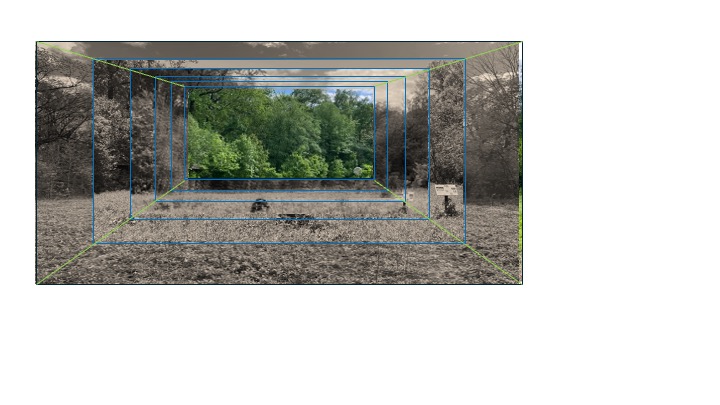
    Roxana, I wanted to show you these, and I thought the exhibition book might be a good resource in general. These are some composite photos by  Anthony Goicolea in the exhibition catalog of Badlands: New Horizons in Landscape that was held at MASS MoCA.  I go back to this book often when thinking about my own work.

    Goicolea 1

    Goicolea 2Goicolea 3Goicolea 4Badlands

    Tags: , ,
  • scissors
    February 3rd, 2010christudogeneral, ww5, ww5-christine, ww5-giana

    hey Giana.

    saw these candies and thought the packaging was fun.
    I will bring them on Sunday as a treat :)

    candy carnaval

  • scissors
    February 3rd, 2010christudogeneral, ww5, ww5-christine

    Wonder Women NOTES  — 31 JANUARY 2010

    CONNECTEDNESS – reclaiming identity
    Cultural Negotiations

    Taking back the experience (whatever that experience may be) – recreate that experience to convey your own sense of community.

    XENOPHOBIA – fear of culture that is different from your own. fear of valuing others tradition. judging the differences.

    comfort in homogeneous behavior
    ignorance of culture causes shameful feelings about self
    perception of self through the definitions of others

    Education forces sensitivity of ethnicity. Connecting through stereotypes.
    Coming out about nationality and how we are interpreting that awareness.

    QUESTION:
    How does your work transcend cultural / physical boarders? How you identify self..
    Find one artist of a different background. Japan. Come up with 2 questions that you would ask.

    Document artistic process.
    Art of negotiation.
    The emotion you draw from your project, the emotion you want to convey will dictate the medium and presentation.
    Organic Installation.
    Design as a means of solution. Function vs aesthetic.
    Material plays a very specific role in defining your project.

  • scissors
    February 3rd, 2010christudogeneral, ww5, ww5-christine

    Wonder Women NOTES  — 24 JANUARY 2010

    IDEA OF CONNECTEDNESS : ASSIMILATION
    transformation as a process. recreation. ideas of intention. sense of purpose.
    generating work. healing. implementing ideas, bringing the experience.
    marrying spaces. continuity and space. technology bridge.
    affection of the space.
    rescuing. globalization. colonization.

    How will viewer experience your experience? Our responsiveness to growth? How can we discuss communication dictate the experience? Consider transformation as a process.

    Relational Cultural Theory
    Feminists developed a community who’s core is empathy and connectedness. Not to create independent selves but to develop a sense of communication through art. Ideas of negation also create a sense of community.

    ALIEN
    multiple identities the shape your work

    GROUP B: (ten min session)

    Pam – hour video blog each day throughout residence. formulated discussions on duality and understanding.
    Diary is the installation. Calendar of days 3 -5 minutes of dialog. Thing a day. Pam’s History Month.
    ref. Nina Khachaturian – artist who adopts her parents accent on video.

    Roxana – pin hole camera. will run a tutorial on how to make this camera with a polaroid back.

    Sonali – complete purchase lists. videos on content and affect. technology marrying Indian culture.
    tiny solar panels sewn on fabric to light an LED. Prototype sketch.
    ref. Anthony Dunn (Royal Academy in London) conceptual and complex theories translated through image

    Lizzy -  ordinary shots of everyday jobs. start with ironing. Lizzy set up the process for the portrait with her mom during the domestic process.
    ref. Willie Cole, uses iron as a medium

    Willa – display traditionally over a doorway. Noren hang alongside lanterns that guide the passage for the ghosts.
    one color silk screen. reminiscent of the Japanese flag.

    GROUP A:

    Holly – Baking a huge salt piece, strain water to form a shape. add food coloring to show water damage.
    controlling the pour, what does the water represent? what does the pour represent?
    contribution to change. interactive installation.
    diluted family life. composition. tackle scale to control drip.
    transformation from structural to organic. starting with an obvious shape that leads to a type of erosion.
    ref. Orozco – ceramic shapes.

    Giana – focus is happiness and the medium is water. essential to the economy, the Panama Canal.
    Agua de Carnaval, Energy Drink – Krrnaval – branding a culture (Panama) through packaging.
    creating a truth where there is no truth.
    -bottle. label. content.

    Agnes – bridging mom’s aesthetic with her own. geometric vs organic. meaning.

    Anjelika – draping sari as western clothes. corset. t-shirt.
    deconstructing the sari down to the jean and tshirt look. hybrid.
    why is it okay to show the belly?
    ref. Megan Nicolau, published book about 500 ways to make a tshirt. 2009 imitation of louis vuitton.

  • scissors
    February 3rd, 2010christudogeneral, ww5, ww5-christine

    Wonder Women NOTES  — 17 JANUARY 2010

    INTRODUCTIONS
    Doris – logistics / Renata – stimulator

    DEADLINE – FEB 28 INSTALLATION
    MAR 3 SHOW

    5th year : Bridging Identity, common thread, concerns in country born of immigrants, post immigrant identity

    one weekly question – MON – FRI post to blog explanation, possibly link to project.
    Renata will post question on Mon answer by Fri for Sunday meetings

    Next week 25 min description of process, project – 20% of project complete – I am in Group A

    How is the viewer experiencing your work?

    Re-depository for memories for future and how they might relate to your ancestors your predecessors.

    Current events relating to your memory, your experience. Connecting the common thread.

    Graphics and propaganda relating to immigration – Renata project to find concrete evidence.

    RECORD OF THE PROJECT:
    Create a post on the BLOG this week related to project. Looking for feedback from wonder women.

    Willa – Japanese decent (multi ethnic), based on grandmother who was a seamstress. Her artifacts are the connection. Dealt with rejection from family, b/c of leaving Japan. Never really accepted as an American. Cat symbol of welcoming.. recreating those images by way of her medium. Final medium not established. Becoming undone.

    Agnes – Polish decent – tapestry that mom and aunt put together. Fusing yarn with candle. Fold it up and store it.
    Using her own clothing. Creating this for her home in Poland. Using materials that no longer exists in a country unfamiliar with her process. Supply and Demand theory on yarn. Gobelin.

    Roxana – El Salvador – “only reside in my skin” medium – photography. landscapes against her skin. find home outside, displacement. more at peace outside, conflict at home. Despite living in a city, nature is her home. TIME – chronology, time based photography, remember narrative, the order

    Gianna – Panama -  melancholic, patience, temper. attitude of fashion, sophisticated. mom rejecting culture. dad engaged with culture. Connected to Panama – father’s attributes, folkloric traditions. Gianna is here based on mom’s influence. Globally talk visually. Packaging pop culture. Real estate and tourism boom. Making carnival water bottle, contents are remnants of carnival. Describe possible side affects. Communicate feelings about carnival through a survival kit.

    Holly – Louisiana rural, cajun. Mom is German- Irish. Idiosyncratic, poetic, metaphor of physical change over time. Salt is a medium and common denominator among all cultures. The change salt will got through is the project. Coast in Louisiana being eroded, project could take the shape of a landscapes. Language breakdown, from grandparents only speaking Cajun French, parents never learned b/c language was discouraged. Only learned English in school, dad self taught Cajun French and never taught Holly. Salt is a symbol for money.

    Lizette – Haitian, single parents, basic english. wood burning medium. Protecting the past, removed from Haiti yet the culture was taught and learned in America. Illustrating odd jobs.. on wood, mom is the inspiration.

    Pam – Barbados, mom is inspiration. Mom passed a year ago, story of personal journey through dad and siblings. Removed from the idea of being Bajan. Series if questions related to returning to Barbados and not ever returning. Duality of culture.

    Sonali – Indian, designer and problem solver. Basic necessities are the inspiration. Next war will be fought over water. Gathering energy, conduit is water. Rural India women wear beautiful mirror garments to walk to the dessert to collect water. Replacing the mirrors with solar panels, to plug in and afford energy for household. Women as hunters gatherers in a time of poverty. Gender roles, women pulling through, men falling apart in a time of crisis. Nuclear family shapes who you become.

    Anjelika – Indian, designer. Deal with the issue of home. Married to an American – Indian, will not return to India to live. Anjelika would consider returning. Recycle old Indian garments into something a little more western. Creating wearable fashions. Blending in fashion. Cutting up sari’s to make western garments, think american apparel scarf. The uniform project. (Niki Lee, artist)

    In which ways to you see your project connected to the immigrant experience? Address how my project is connected to migration patterns. Title the post. Answer question as a post.
    Second post – a blurb about where I am in my proposal.
    Read pages 6 – 14, addressing the question Renata posed.30
    Feb 28 = installation
    Feb 21 = last official meeting
    Mar 3 = JC University show
    BLOG : www.gaiastudio.org/wonderwomen, login with user/pass I registered.

  • scissors
    February 2nd, 2010willageneral, ww5, ww5-christine

    Christine,

    I found the ring light but I think it’s still smaller than you need. It says “fits directly on lenses with 52mm thread and others with adapter ring”. Let me know if this would be any help. I have a bunch of photo equipment but I just don’t know what’s useful because I don’t know what half of it is!

  • scissors
    February 1st, 2010Renata Moreirageneral

    Great discussion! I was moved by your personal stories and glad to be part of a team fostering creativity, respect, and appreciation via connection and empathy…  Hope you also enjoyed crossing interdisciplinary divides while trying to figure out how the relational-cultural model may be applied to your creative process. So much more to learn!

    On that note: next week’s reading (The ’90s Culture of Xenophobia by Guillermo Gómez-Peña) was emailed to you. Please let me know if you didn’t receive it so I can resend, ok? And here’s the question for discussion:

    Part 1. How does your work transcend borders and create new ideals of what it means to be “American/immigrant/mixed heritage” (whichever way you self identify)?

    Part 2. Research one artist of a different ethnic/cultural background than yours – preferebly someone whose work you admire – and imagine a couple of questions you’d wish to ask her. How would she answer your questions?  

    I’d suggest doing part 2 as a short “creative writing” piece. Have fun with it! I’ll be having an imaginary dialogue with Louise Bourgeois. She was born the same day as my mother. ”any interest in relational cultural models, louise?”  :)

    ah! motherland.

    “She is best known for her Cells, Spiders, and various drawings, books and sculptures. Her works are sometimes abstract and she speaks of them in symbolic terms with the main focus being “relationships” – considering an entity in relation to its surroundings. Louise Bourgeois finds inspiration for her works from her childhood: her adulterous father, who had an affair with her governess (who resided in the home), and her mother, who refused to acknowledge it. She claims that she has been the “striking-image” of her father since birth. Bourgeois conveys feelings of anger, betrayal and jealousy, but with playfulness. In her sculpture, she has worked in many different mediums, including rubber, wood, stone, metal, and appropriately for someone who came from a family of tapestry makers, fabric. Her pieces consist of erotic and sexual images and also forms found in nature, such as her sculpture, Cumuls (referring to clouds in the sky) and Nature Study. Although she has worked with spider imagery since the 1940s, perhaps her most famous works are the spider sculptures from 1994 to 2003…”

  • scissors
    January 31st, 2010Anjelikageneral, ww5, ww5-anjelika
    Sari drape 1 from back

    Sari drape 1 from back

    Sari drape 1 from front

    Sari drape 1 from front

    sari drape 1 zoom on detail

    sari drape 1 zoom on detail

    Tags: , ,
  • scissors
    January 31st, 2010willageneral, ww5, ww5-willa

    Using relational cultural theory, how can we discuss connection and communication?

    The relational-cultural model encourages growth toward connection and relationship instead of independence and isolation. I think the experience of many people living in the US is that of rejection and isolation. Prejudices prevent many of us from developing true connections with others.  The sense of home comes from feeling a relationship or connection to those around you.

    How do our multiple identities inform our work?

    By reconnecting with our roots, we can also begin to understand where we fit in. As Fairbairn states, “it is only in its relationship to these objects that its true nature is displayed.”

    I feel that because the US is thought of as a country of immigrants, where your family is from has become important. Growing up without any strong traditions or solid roots in my heritage, I felt this sense of shame, that I didn’t know where I was from. My family came from so many different countries, that I didn’t have one to claim. Only now am I realizing that even when one does know where they are from, they can still feel as lost as I did.

    How do you want the viewer to experience your work?

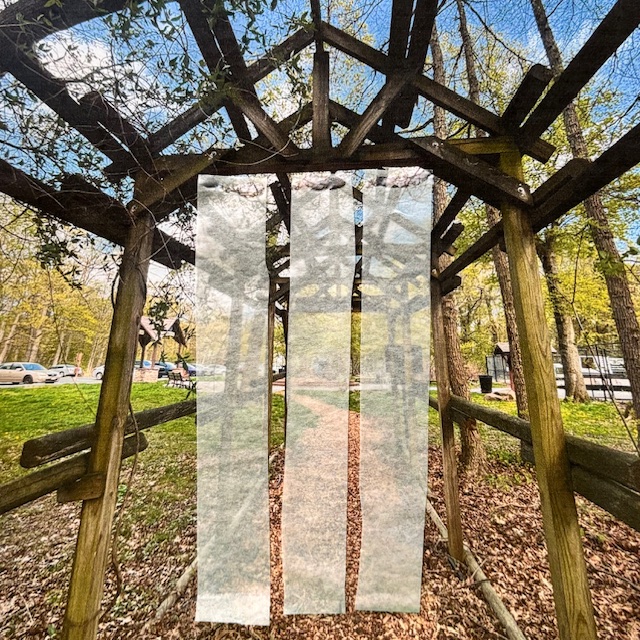
    I especially liked the part of the reading that says, “a ‘boundary’ could be conceived as a place of meeting and exchange with the surrounding milieu rather than as a place of protection from it.” I would like viewers to experience my work as this type of boundary. Although the noren are particular to Japan, they can be interpreted as a universal sign of a boundary or a passage from one place to another.

  • « Older Entries

    Newer Entries »