Root System

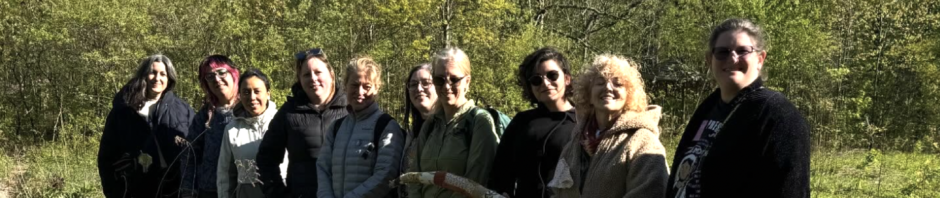
The fourteenth edition of the Wonder Women Residency Project called Root System asks artists to propose and create artworks as part of a thematic project developed through weekly group meetings over two months. The cohort of ten artists will discuss their ongoing projects, philosophies and processes surrounding the projects and planning for installation and performance. The residency will culminate in an outdoor exhibition at Wildflower Sculpture Park in South Mountain Reservation in September 2026.
Current Wonder Women
Wonder Women Archives
-
Past Wonder Women
- Agnieszka Wszolkowska
- Alana Kakoyiannis
- Alyssa Lawler
- Amanda Thackray
- Andria Morales & Maya Escobar
- Anjelika Krishna
- Avani Palkhiwala
- Cathleen Marie Thérèse Parra
- Claudia McNulty
- Cristine Posner
- Deborah Sperry
- Eileen Ferara
- Francisca Caporali
- Giana Gonzalez
- Gwen Charles
- Hannah Kirshner
- Holly Pitre
- Jacquelyn Strycker
- Jasmine Graf
- Jennifer Torres
- Jessica Demcsak
- Joanna Rose White
- Kate Eggleston
- Kathleen Kranack
- Katya Grokhovsky
- Kristy Lopez
- Larysa Myers
- Lillian Ribeiro
- Linda Hu
- Linda Streicher
- Lindsey Muscato
- Mary Jeys
- Maya Joseph-Goteiner
- Melissa MacAplin
- Meredith Goncalves
- Michelle Levante
- Michelle Loughlin
- Olga Mercedes Bautista
- Panda Suwann
- Pollie Barden
- Rachael Serbinski
- Roxana Marroquin
- Salome Asega
- Sarah Nelson Wright
- Sharon De La Cruz
- Sharone Vendriger
- Sonali Sridhar
- Sonia Louise Davis
- Stephanie Tichenor
- Tamara Gubernat
- Vandana Jain
- Wendell Jeffrey
Categories
Category Archives: ww5-sonali
Sonali Bio
In 1998 I moved from Bangalore, India to Atlanta, Georgia to study Communication Design at the Atlanta College of Art. The transition from curry to BBQ was tough, but I soon learned the value of acclimation and tempered my studies … Continue reading
Posted in general, ww5, ww5-sonali
Comments Off on Sonali Bio
Sonali: Work in Progress
Basic Circuit Schematic: The solar cell is connected to a diode, switch to an LED with a capacitor to store the electricity. Embedding solar cells by replacing the mirrors Breaking up the mirrors
Sundays
Posted in general, ww5, ww5-agnes, ww5-anjelika, ww5-christine, ww5-giana, ww5-holly, ww5-lizette, ww5-pamela, ww5-roxana, ww5-sonali, ww5-willa
Comments Off on Sundays
Thoughts 3
Odhni plays a significant role in this conversation of multiple worlds. The current environmental distress defines meeting and maybe even melding of cultures. My personal interest in seeing what it takes to harness enough energy to bring light into a … Continue reading
Posted in ww5, ww5-sonali
Comments Off on Thoughts 3
Inspiration for all
This is some amazing work that I came across today.
Posted in ww5, ww5-anjelika, ww5-giana, ww5-holly, ww5-sonali
2 Comments
Sonali Research Links
“Critical design uses designed artifacts as an embodied critique or commentary on consumer culture. Both the designed artifact (and subsequent use) and the process of designing such an artifact causes reflection on existing values, mores, and practices in a culture.” … Continue reading
Sonali: Response to Question 1 – Week 1
My immigrant experience has been to shed the preconceived social norms of the east and embrace the freeform creativity of the west. These past 12 years of being in the US have coincided with the age of high speed connectivity, … Continue reading
